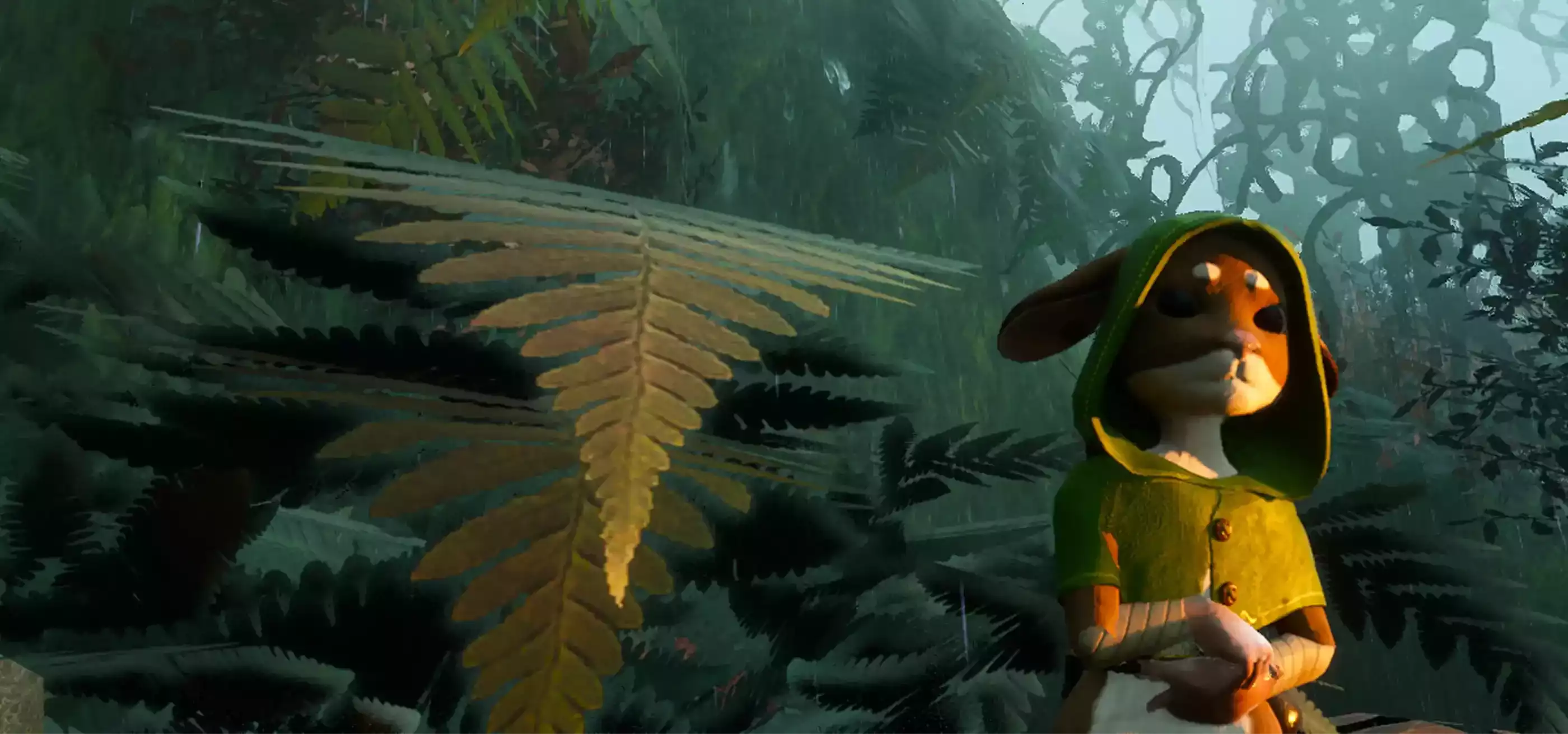
A tiny mouse can leave surprisingly large pawprints — just ask DigiPen game team Reclamation.
“Eyes of the Forest came from an amorphous idea of a ‘squirrel game’ a friend of mine had during sophomore year, where the player would play as a little woodland critter and hide from scary owls,” says design lead, narrative designer, and BA in Game Design student Noah Crissey. Before long, the squirrel became a mouse, and that concept for a simple stealth game blossomed into something far more ambitious.
Reclamation followed their pipsqueak protagonist Thistle through Eyes of the Forest’s dark fantasy world for two years of development, double the required length of a junior DigiPen game project, and grew to a 25-person team. Their outsized effort paid off, earning their game a showcase spot at the Seattle Indies booth during this weekend’s Washington State Gaming Expo at Puyallup’s Washington State Fair and Events Center.
“This is a project our team has poured our hearts into over the past two years, so having the opportunity to share it with a much larger public audience feels both empowering and deeply rewarding,” says producer, UX/technical designer, and BA in Game Design student Teddy Delaney.
Described by the team as a “story-heavy stealth thriller,” the third-person 3D adventure puts players in control of mouse hero Thistle as they navigate through a dangerous, post-industrial forest with their kindly raccoon mentor Russel. Nightmarish bird monsters who patrol the trees stand between the duo, their quest for a lost artifact, and escape from the gloomy woods.
“The core hook was delivering tension and horror through vulnerability,” Delaney says of the central idea Reclamation rallied around at the beginning of the team’s junior year in September 2024. “From the perspective of a small prey animal, that framing immediately resonated with us, especially the idea of experiencing fear and suspense through scale rather than spectacle.”
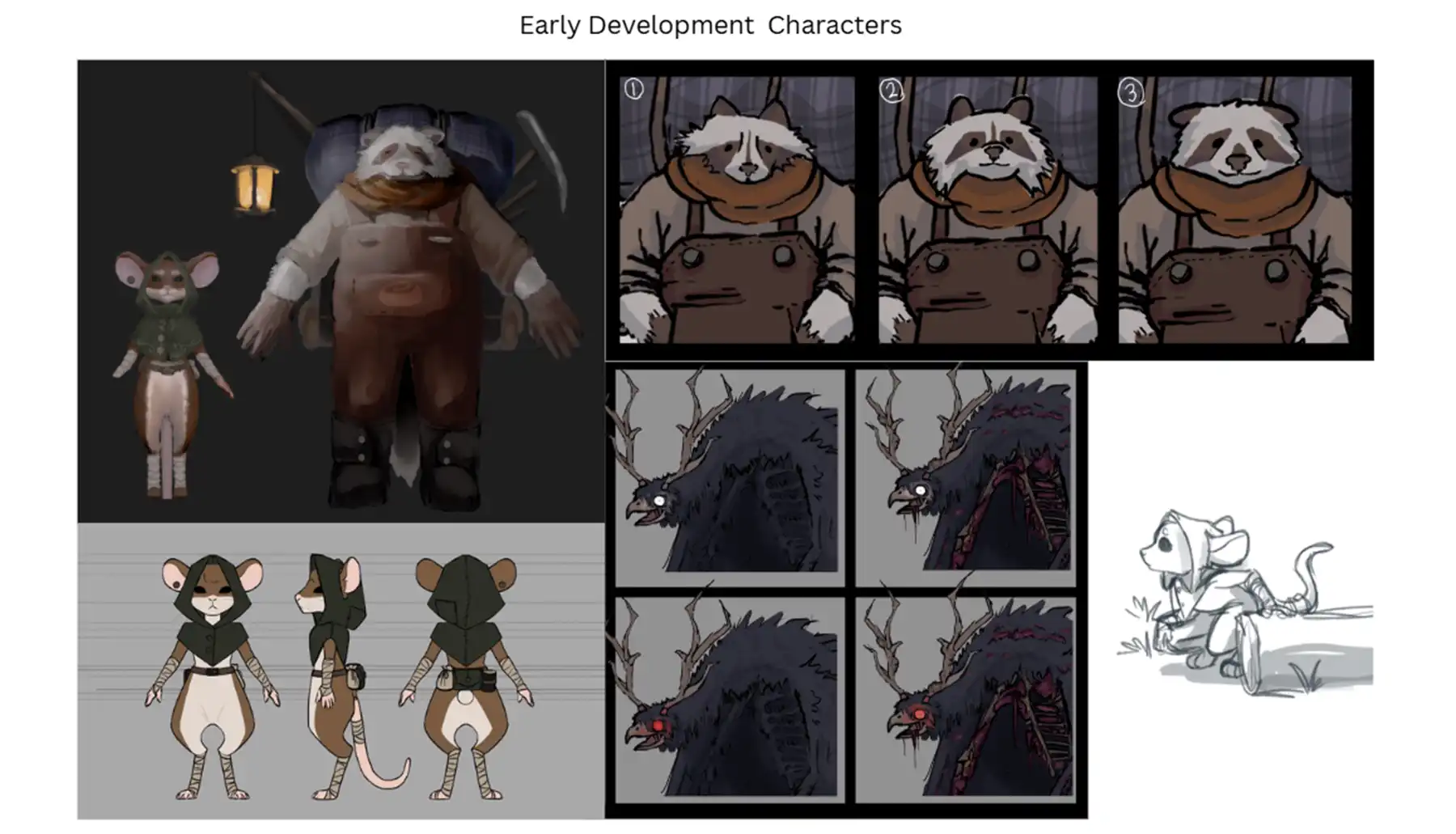
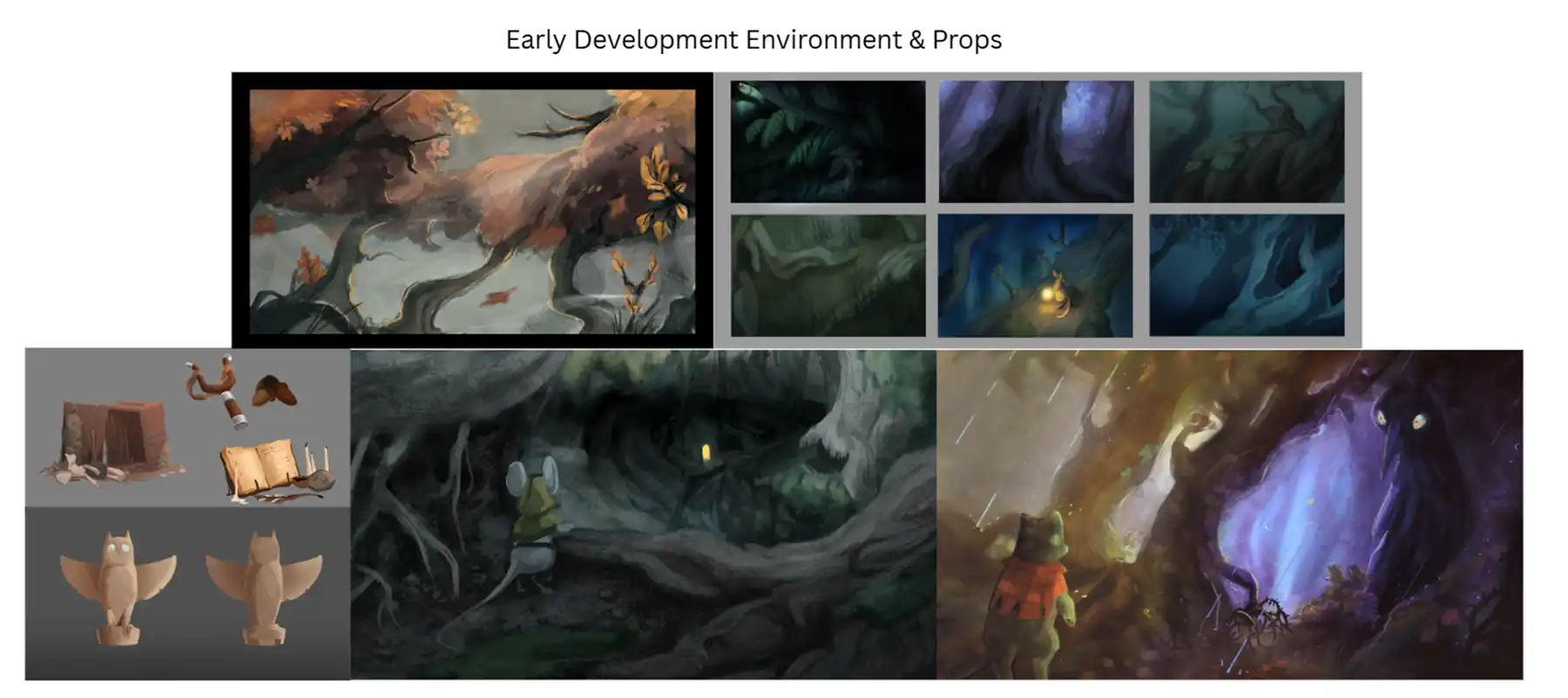
The 12-person art team latched onto classic mouse-forward films and games like The Tale of Despereaux, The Secret of NIMH, and Moss for inspiration. But a very human horror game proved most impactful.
“One of the biggest overall artistic inspirations were the Little Nightmares games, with their dark fairytale elements and extreme scale,” says art lead, technical artist, and BFA in Digital Art and Animation student Evelyn Cullen. Meanwhile, environment art lead and fellow BFA in Digital Art and Animation student Tuli Mugrabi looked to unique technical approaches the team might take to create the distinct look Reclamation was hunting for.
“We were inspired by games that blend 2D and 3D elements to achieve a fairytale-like quality while still feeling grounded and immersive,” Mugrabi says, citing Planet of Lana as an influence on their decision to combine 2D and 3D assets to create the game’s seamless parallax background effect. Taking a cue from artistic WWI game 11-11: Memories Retold, the team also implemented a clever distance-based Kuwahara filter, an image processing effect that makes visuals far from the player appear as though they are painted.
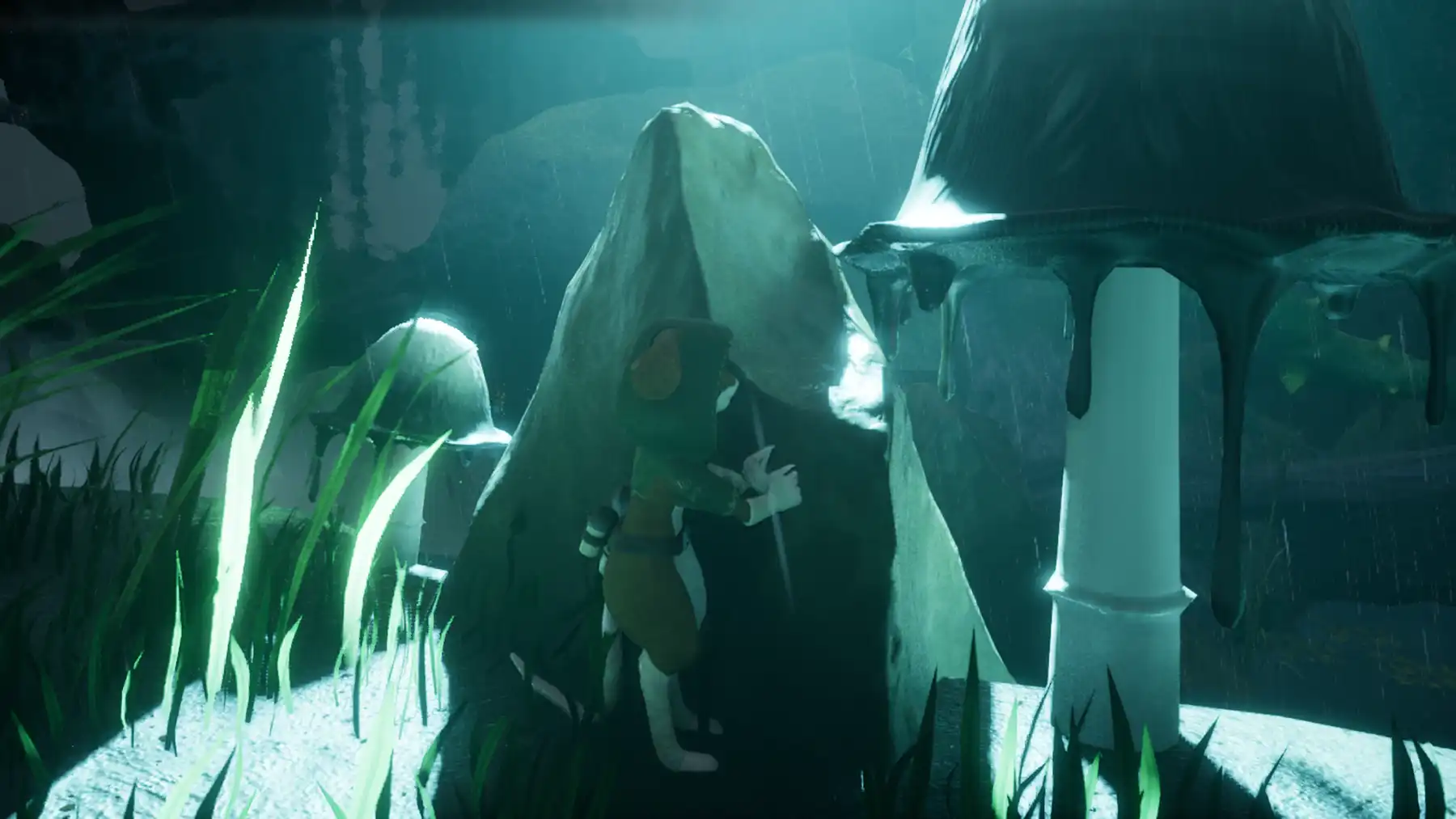
On the gameplay side, the team’s designers looked to mechanics from tension-packed stealth games, including the camera from The Last of Us, the elaborate hide and seek of Assassin’s Creed, and the spotlight-driven threat and avoidance of Inside, for cues on creating their own nervy take on the genre.
“We designed encounters around our enemies that intentionally combine and stress these systems,” Delaney explains. “The camera communicates emotional weight — calm during stillness, tension during movement, and instability during moments of danger— helping sell the feeling of vulnerability at the heart of the experience. Levels are built as large, traversable spaces that force players to leave moments of safety and expose themselves to danger, particularly when crossing areas controlled by sweeping spotlights.”
Thistle isn’t completely helpless when out of cover, though. Thanks to one of the non-stealth game inspirations the team drew upon, Link’s slingshot from the Nintendo 64 classic The Legend of Zelda: Ocarina of Time, the tiny hero has a trick up their fur.
“While vulnerable, players retain agency through the slingshot, which can be used to distract enemies and manipulate space,” Delaney says.
Despite the handy weapon, the game is actually combat free, a conscious decision the ambitious team made to stay within scope. Even though crafting Eyes of the Forest with a 25-person crew gave Reclamation considerable creative power to achieve their goals, it also came with plenty of challenges.
“Previously, the largest game team I had worked with was 11, so to more than double the size was certainly difficult,” level design, QA lead, and BA in Game Design student David Rust says. “Eventually though, with communication and teamwork, we were able to make a very ambitious game in a very short amount of time.”
After a rocky start, the team capitalized on their campus lab space by organizing a seating chart structured around disciplines that frequently collaborated. They established directed strike teams and set tighter production timelines and milestones — proactive changes that set them up for much greater success later on.
“Working with such a large team was something I was genuinely excited to take on,” Delaney says of acting as the team’s producer. “While the scale could feel daunting at times, it was incredibly rewarding to work so closely with so many talented people.”
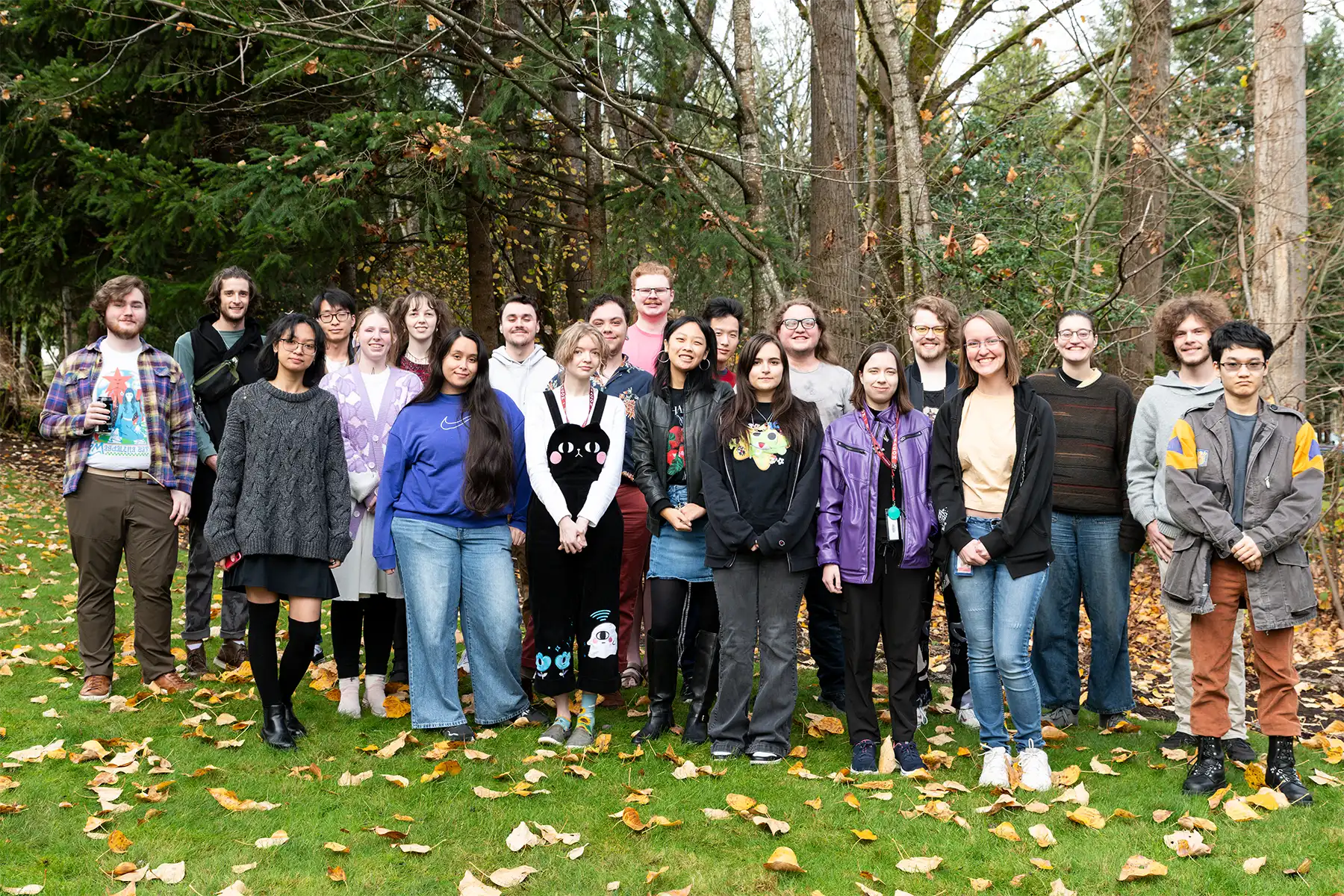
For all its challenges, cross-discipline collaboration took the team in some interesting directions. “For example, the art team was a great source of support and inspiration for the narrative designers as we were developing the story and setting of the game,” Crissey says. “The game’s characters or story would not have been nearly as strong were it not for the art team’s input.”
Many on the art team found the collaboration with the narrative designers just as impactful on their own work. “The team deeply explored the game’s lore and ensured it was visually embedded throughout the environments to support the characters’ journey before and during the story,” Mugrabi says.
Reclamation says their decision to extend development into senior year across four semesters instead of the typical two for junior projects bolstered Eyes of the Forest from a promising prototype to a polished experience. “We chose to continue across four semesters because each phase revealed more potential in the project than we could responsibly leave behind,” Delaney explains. “Eventually, the project reached a point where the question was no longer ‘does this work?’ but ‘how do we make this feel great?’”
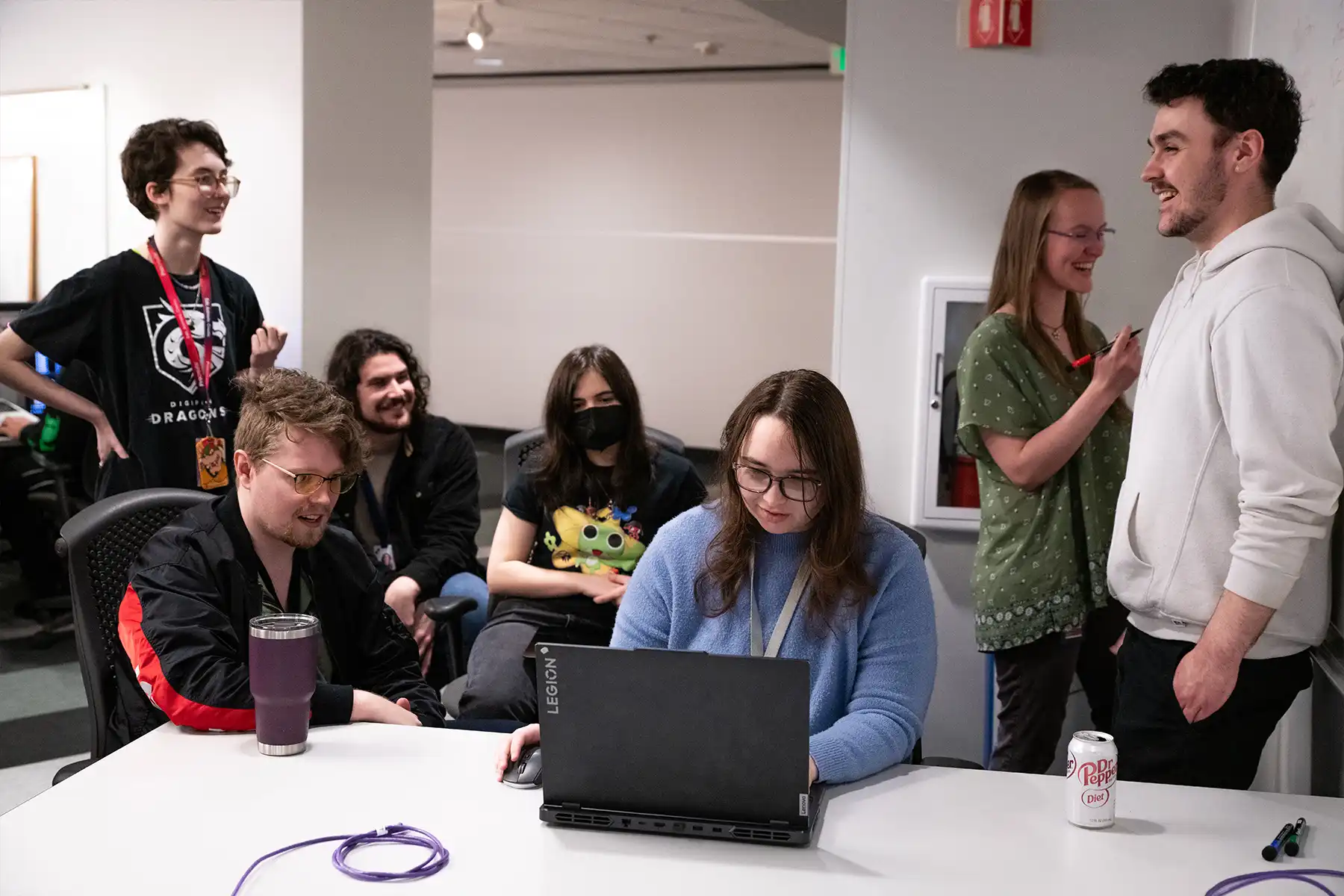
The third semester, GAM 375, became critical for achieving that refined experience. “Since we’re making a game so focused on story, immersion, and scares, small tweaks and polish for the right impact are huge in the end,” level designer and BA in Game Design student Kelty Lenac says. Rust collaborated with Lenac to complete a thorough second pass on the game’s core level design during GAM 375 and found the extra time to be revelatory. “I would say the majority of my knowledge of how to do level design came from that semester specifically,” Rust says.
Now a streamlined team of four, the group is focusing their efforts on final polish for their fourth semester. “This smaller team allows us to move quickly and make precise, high-impact changes,” Delaney says.
Reclamation agrees that giving the project time and space to grow has been transformative.
“I’m especially proud of the swamp, an area that other folks were least confident in the initial drafts,” Lenac says. “I had this really strong vision of a moody, oppressive place where the player really feels lost and alone for the first time, and now, in my opinion, it’s one of the richest areas of the game.”
Players will get to scurry through nearly all of the game’s richly realized world at the Washington State Gaming Expo this upcoming weekend, where the team will present a roughly 95% complete version of Eyes of the Forest. Reclamation applied for a spot at the Seattle Indies booth, a non-profit supporting and promoting the work of local game developers, through the organization’s Discord.
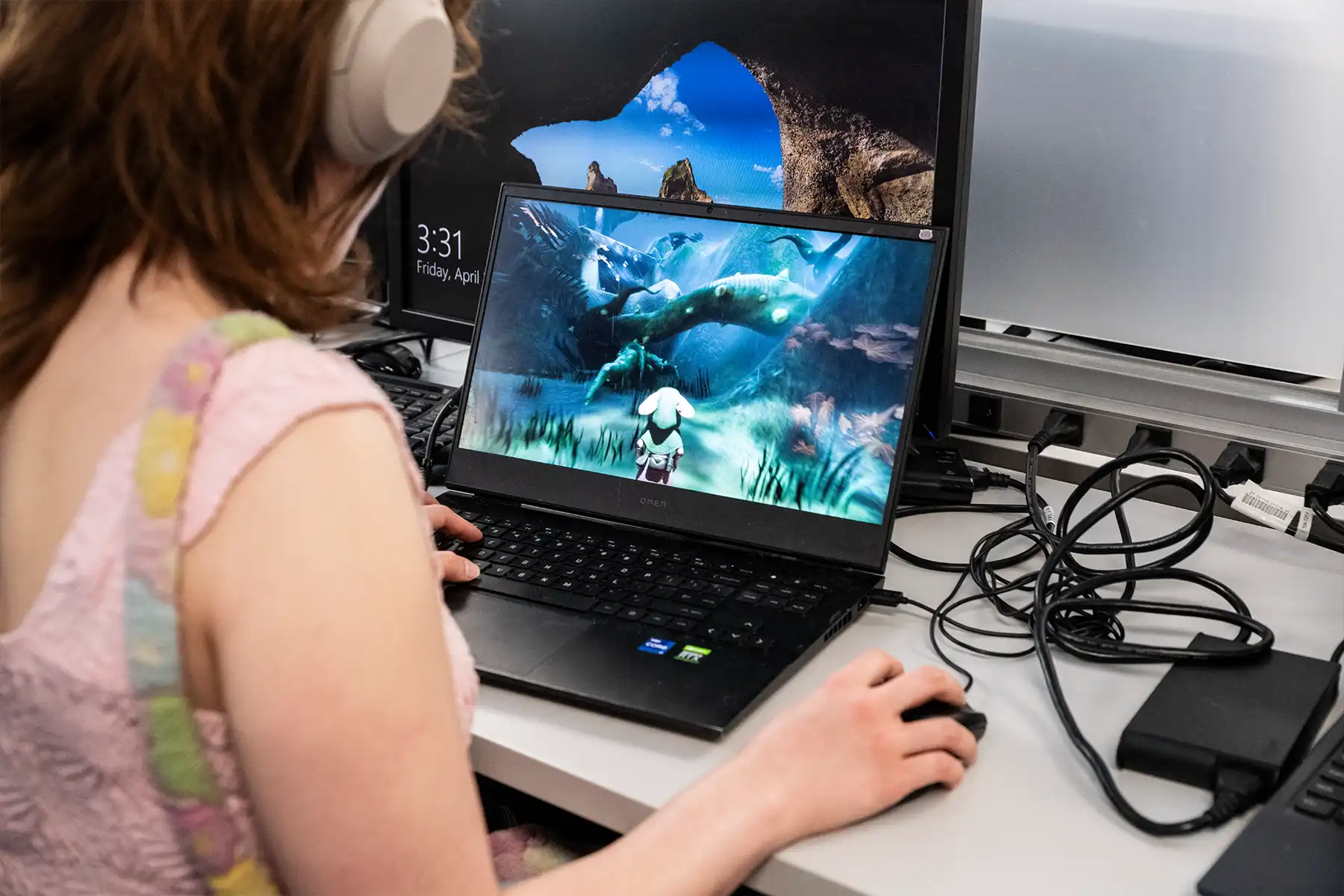
“It was validating to know the project stood on its own in that space,” Delaney says.
Players at the convention won’t just get to enjoy the game — they’ll also play an integral part in making the final product even better.
“We’re intentionally treating the expo as an opportunity for informal public playtesting,” Delaney explains. “We want to observe how new players engage with the game in a real-world environment and use that feedback to make any final tweaks before full release.”
Even before collecting that last bit of player feedback, there’s one final touch the team already knows they would like to add before the game’s projected late April 2026 release on DigiPen’s Steam publisher page, capitalizing on their cuddly cast of critters.
“I am currently working to get a DigiPen commissioned line of plushies,” Delaney says.
Eyes of the Forest is playable at the Washington State Gaming Expo from February 6–8 at the Washington State Fair and Events Center, 110 9th Ave SW, Puyallup, WA.