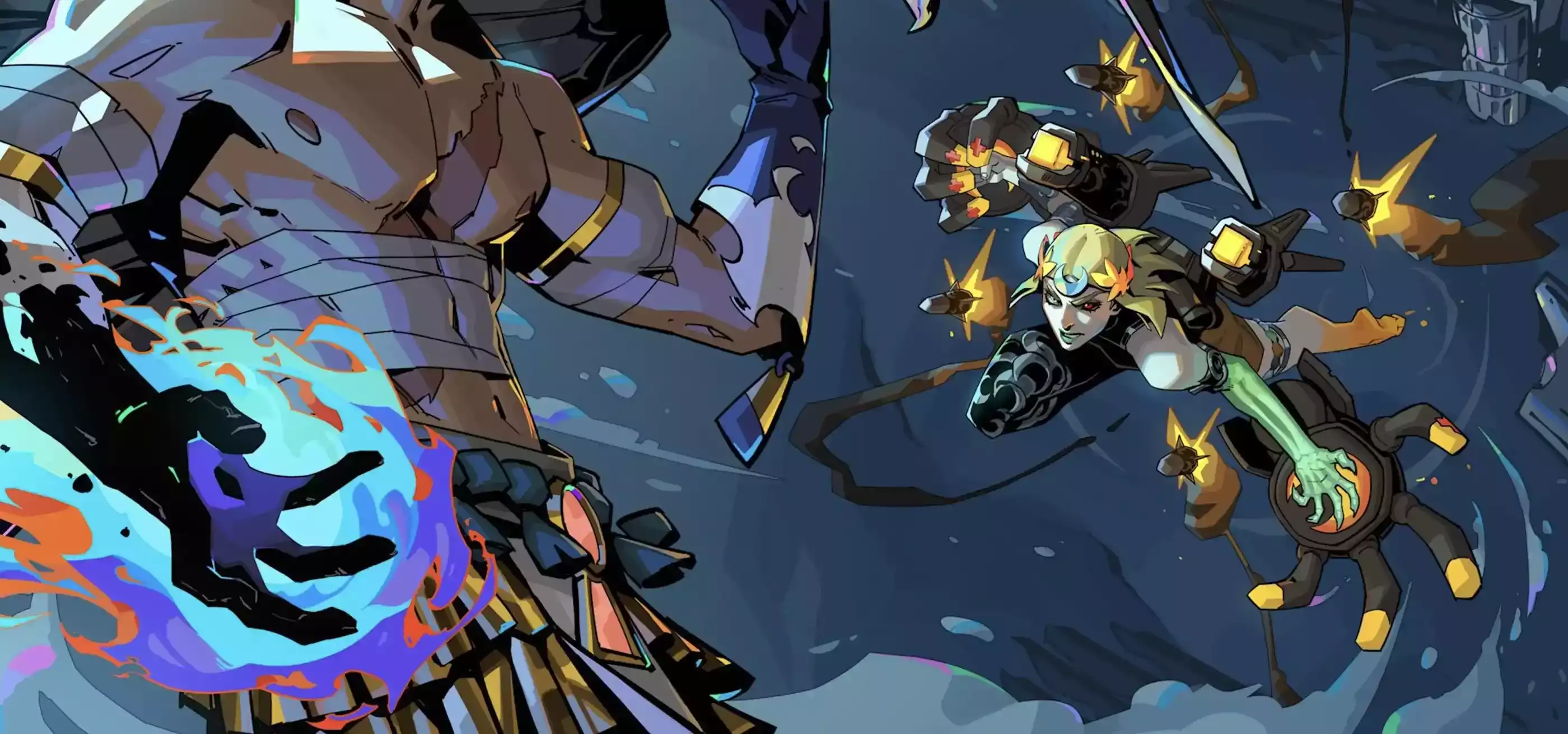
As a teen, Devansh Maheshwari was often up to one of two things — teaching himself the basics of programming and game development, or battling through the floating, fantasy world of Bastion. “I knew that I wanted to make video games before I graduated high school,” says the 2019 BS in Computer Science in Real-Time Interactive Simulation graduate. “I spent many hours playing Supergiant’s early title Bastion back then, and I was really inspired by its storytelling, music, and distinctive art style.”

Drawn to DigiPen’s specialized curriculum in game development, Maheshwari enrolled and quickly discovered that many fellow Dragons shared his passion for Supergiant Games, creating student game projects inspired by the studio’s signature isometric action-RPGs. Today, Maheshwari is a Supergiant himself, working as a graphics engineer on the studio’s most ambitious title yet — the critically-acclaimed, 2025 Game of the Year-nominated Hades II. “It was surreal to get an opportunity to contribute to a studio whose games had inspired me when I was just starting to think seriously about making games myself,” Maheshwari says.
One of the pivotal moments that set Maheshwari on his path to Supergiant came during his sophomore year game project course. “It was the first time I got to build a fully custom C++ game engine from the ground up, and that experience had a huge impact on my technical focus,” Maheshwari says. The project found him working “close to the metal,” a core principle of DigiPen’s approach to computer science education that means students write code communicating directly with the computer’s hardware, allowing for more control and efficiency. “Handling rendering, memory management, and all the low-level systems gave me a real appreciation for engine development, and it felt very similar in spirit to the kind of technology we use at Supergiant today,” he says.
Shortly after graduating, Maheshwari found a contract opportunity with Supergiant in 2020 helping the studio translate their custom C# game engine to the C++ programming language to improve performance. “I jumped at the chance,” Maheshwari says. “I spent about a year helping with the port and various engine optimizations, and after that, I was offered a full-time role to continue working with the team on their next project, which turned out to be Hades II.”
With its addicting gameplay loop thrusting players into a stylish take on the ancient Greek underworld and its mythological pantheon, Hades was heralded as a masterpiece of the roguelike genre upon release in 2020. Setting out to develop the sequel, Maheshwari says one of the biggest challenges was, naturally, making everything twice as big as its predecessor. No longer confined to the underworld, players in the sequel could now embark on separate, distinct runs on the surface as well, meaning double the realms to render. A Herculean task, to say the least.
“The sheer scale of the game essentially meant building almost twice as much game content while continuing to support platforms that shipped the original Hades five years ago,” Maheshwari says. “From a graphics and performance standpoint, this pushed us to rethink and optimize nearly every part of the pipeline.”
As a graphics programmer, Maheshwari was responsible for maintaining and evolving the custom, in-house rendering engine that brought Hades II’s visuals to the screen and handled everything from the environments and characters to visual effects and user interfaces. “In many ways, Hades II pushed my skills in new directions. It wasn’t just about implementing new visual features, but about ensuring that all the beautiful, complex art our team created could coexist within the engine’s limits,” says Maheshwari. “We had to be extremely disciplined about efficiency by profiling, testing, and optimizing at every stage to make sure the game ran smoothly on all supported hardware.”
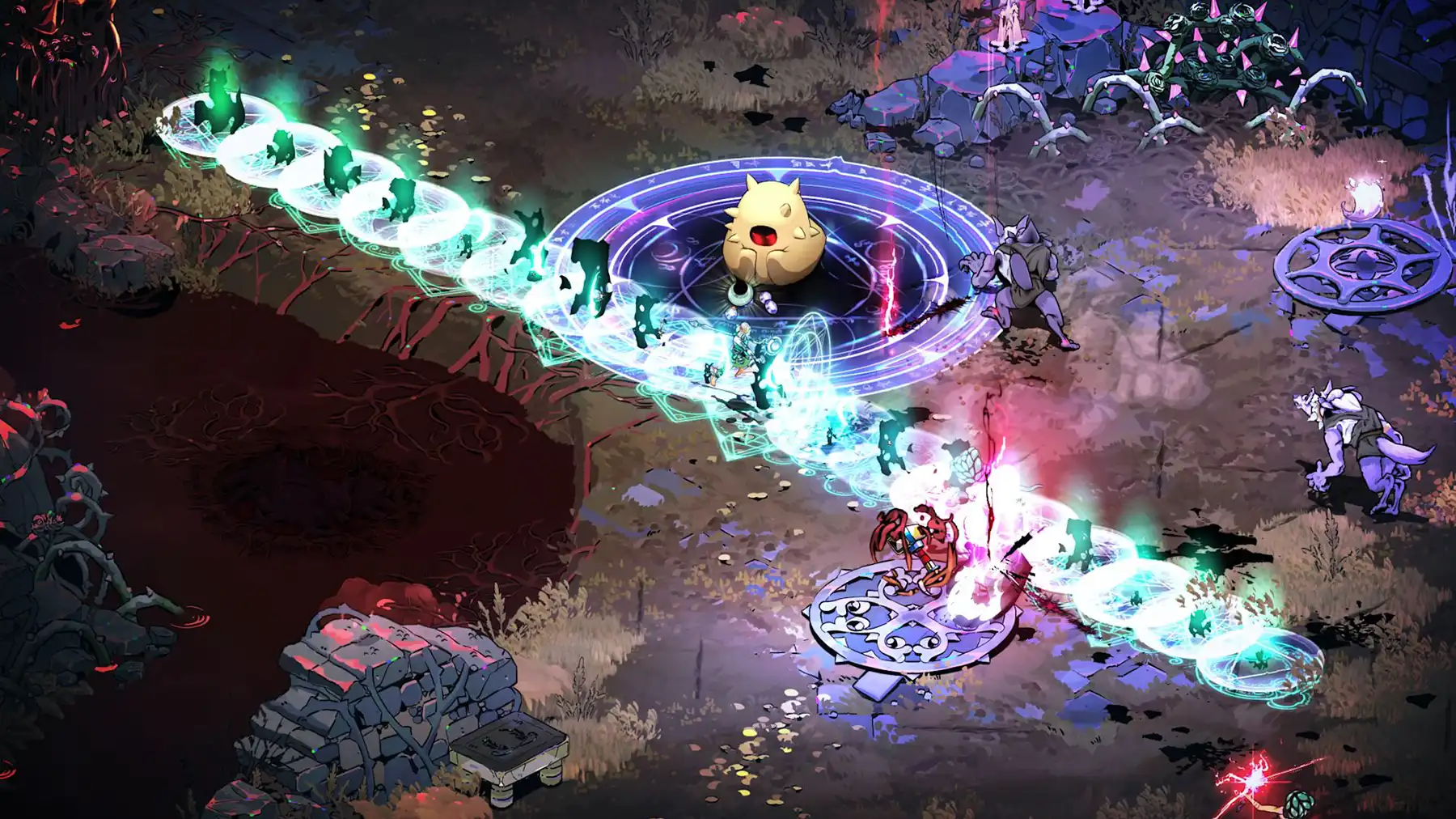
Of those supported platforms, Maheshwari spent considerable time focused on the Nintendo Switch and Switch 2, writing the custom rendering layer that gathers all the game’s graphics drawing commands and sends them to the GPU for display. “Over the course of development, I refined this layer extensively, fixing bugs, adding features, and aligning its behavior with our PC rendering backend,” Maheshwari says. “I implemented a series of optimizations to make sure the renderer never became a bottleneck, maintaining our target of a consistent 60 FPS on Switch 1 and even 120 FPS on Switch 2.”
Hades II carries over Supergiant’s iconic, painterly 2D look from the original, but behind the scenes, the game is one of the studio’s first to feature fully 3D character models rendered in real-time, a brand-new pipeline Maheshwari calls one of his proudest contributions. “It was a major shift from the entirely 2D workflow of the first Hades,” Maheshwari says. “Making the 3D animations visually cohesive with Supergiant’s signature hand-painted 2D art style required a good amount of experimentation and iteration, and meant rebuilding many character-related effects from scratch.”
The new pipeline allowed Hades II to support twice as many characters with faster performance and less memory usage. In fact, Hades II’s PC file size is over 1 GB smaller than the original, a feat worthy of the gods themselves. The new system also allowed the development team to implement smoother transitions between animations, making character movement look much more natural. “In Hades, for instance, [player character] Zagreus would turn in place and ‘tank turn’ when changing direction, but with the 3D approach in Hades II, we were able to add proper turn animations and subtle leaning blends, making character motion feel far more fluid and lifelike,” Maheshwari says.
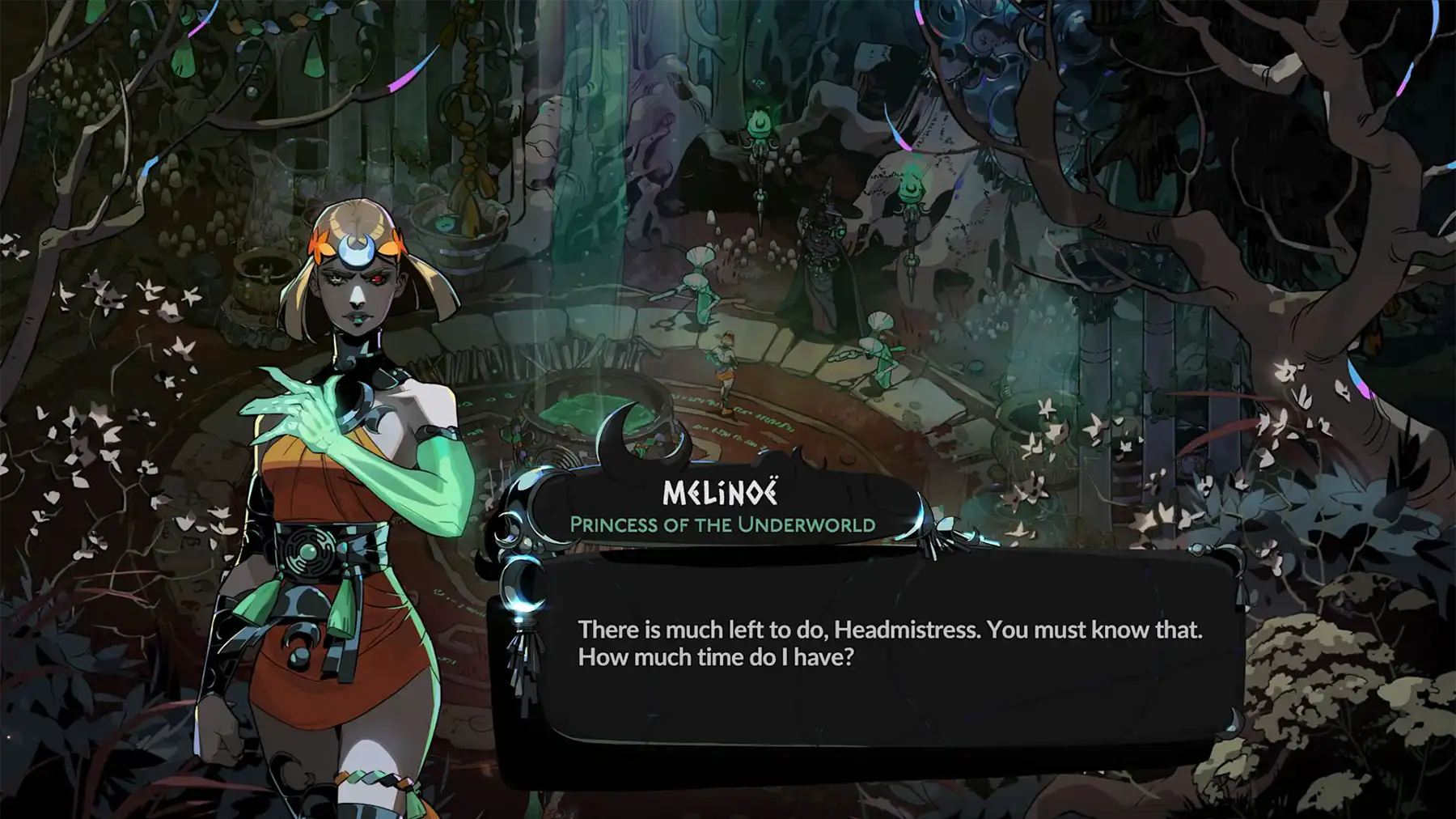
Opening the game to early access for over a year before its official full release in September 2025 gave Maheshwari and the Supergiant tech team the chance to take feedback from the player community and sharpen the experience even further. “It was incredibly rewarding to see the community so engaged, helping us polish and stabilize the game so that by the time we reached version 1.0, Hades II was as fun and reliable as possible,” Maheshwari says. The appreciation was mutual. Players and critics heaped praise on Supergiant’s Olympian efforts, with Hades II becoming the highest rated game of 2025 on Metacritic at a 95 score average.
“Watching fans connect with the game, the characters, the world, the combat, the art, and the music has been really gratifying,” Maheshwari says. “For me, what’s been especially meaningful is seeing players notice and appreciate the little details we poured so much time into, from the visual polish and performance to the animation touches and gameplay refinements.”
Just like Hades II players who have to persevere through waves of baddies to reach the surface, Maheshwari attributes his ability to persist through the demanding work of game development to his strong foundation at DigiPen. “It taught me not just how to write code or build systems, but how to collaborate across disciplines, manage scope, and stay positive through the inevitable challenges that come with game development,” he says.