
AdHoc Studio is a small but mighty developer. Kiera Williams joined the studio as just one of four programmers, and having previously logged time at industry giants like Nintendo and Blizzard, she was pleased to discover something she’d never experienced before: she was outnumbered by writers.
“There are six writers at the studio. That’s 20 percent of the company!” the 2020 DigiPen graduate grins. “One of the most unique things about working at AdHoc is that we had a full working script even before the gameplay was figured out. Everything was built up around that. It’s an inversion of how it works most places.”
That narrative-first approach paid off. AdHoc’s 2025 debut Dispatch crushed the studio’s three-year sales target in just three months, won Outstanding Story-Rich Game in the 2025 Steam Awards, and snagged a Game of the Year nomination at the 29th Annual D.I.C.E. Awards. The game’s story, an office comedy about a washed-up superhero forced to take a humdrum hero-for-hire call center job at the Superhero Dispatch Network, resonated with critics and players alike. That’s no accident, as AdHoc was founded by industry veterans from Telltale Games, the studio that practically defined narrative gaming during its 14-year run.
“I played the Sam and Max games a bunch growing up, The Wolf Among Us, Tales from the Borderlands. They were so valuable to me,” Williams says. “Going in and interviewing at AdHoc, I was like, wait, these are some of the exact same people who worked on your favorite Telltale games as a kid!”
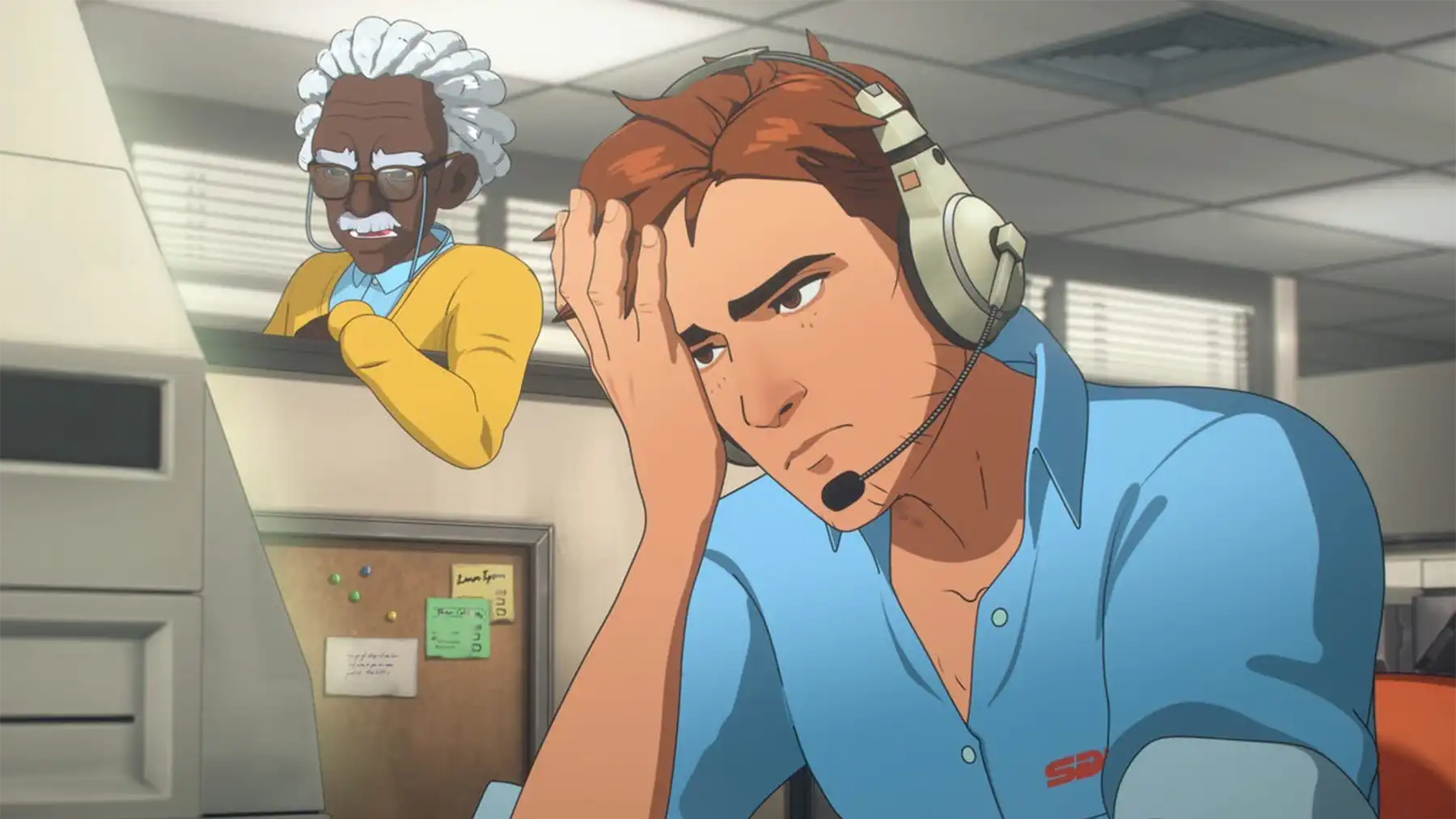
For the Redmond, Washington native, Williams’ path to programming AdHoc’s 2025 narrative hit actually started long before her childhood Telltale obsession. “Even all the way back in first grade I knew DigiPen is where I wanted to go, and making games is what I wanted to do,” she says. The draw wasn’t just proximity — DigiPen’s connection to the Portal series sealed the deal. “I wouldn’t normally trust the career aspirations of a first grader,” Williams laughs, “but I kept re-evaluating as I grew up, and it ended up being right for me.”
We made a lot of custom game engines as part of [DigiPen] projects, and it’s just really, really useful to know how a game engine works.
Initially enrolling as a BS in Computer Science and Game Design student, Williams decided to switch to the BS in Computer Science in Real-Time Interactive Simulation program after freshman year, finding herself drawn more to the programming side of game development.
“We made a lot of custom game engines as part of the projects, and it’s just really, really useful to know how a game engine works,” Williams says. “The secret is that all game engines, despite their differences and quirks, fundamentally work in roughly the same way, and understanding one is super helpful for being able to look at any game and go, ‘Here’s what’s happening,’” Williams says.
Coming to AdHoc as a generalist game programmer and one of only four programmers on the team, that low-level knowledge of game engines and her skills in C++ proved absolutely vital. When asked to describe her role in developing Dispatch, Williams says it’s less a question of what she did do, and more a question of what she didn’t. “My job was doing the stuff that needed to happen for the game to exist,” she laughs. “It’s like that joke, ‘How to Draw an Owl. Step 1: Draw a circle. Step 2: Draw the rest of the owl. My job was drawing the rest of the owl.”
From the core logic governing the game’s player-driven story choices to the architecture of its dispatch center management gameplay sending heroes to respond to crimes, to managing assets and inevitable bug fixes, Williams’ programming work touched just about every aspect of Dispatch.
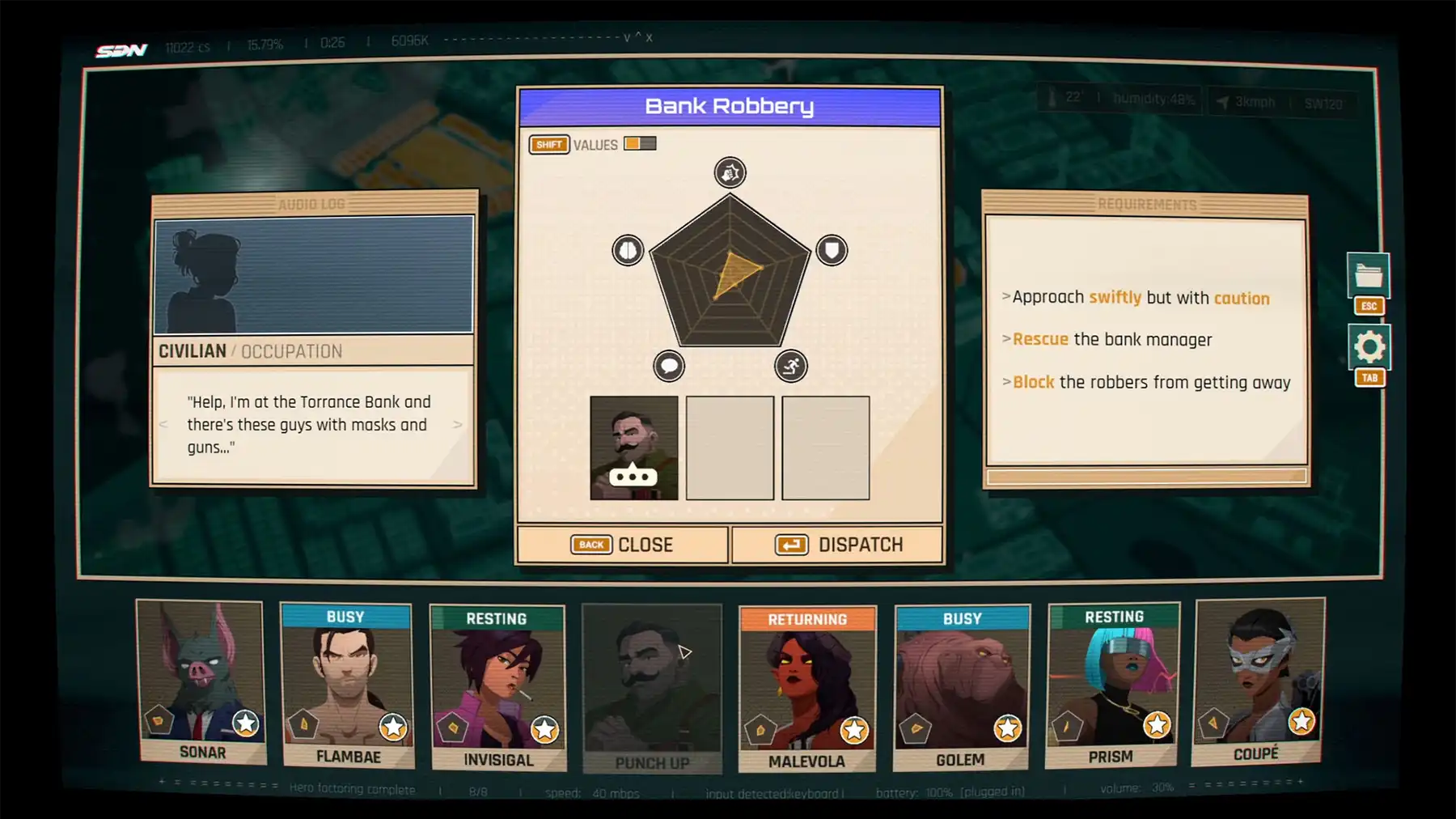
Happily, that’s exactly what she was looking for when she applied to work at the studio. “My brain craves novelty, and that’s part of why AdHoc has been so great for me. Because it’s a small team, I have plenty of opportunities to worm my fingers into all the different corners of dev,” she says.
After working on large AAA studio teams, including an internship at Nintendo and a turn as a tools programmer on Diablo IV at Blizzard, Williams describes the level of agency she’s found at AdHoc as a perfect fit.
“A lot of what I like about this job reminds me of working on DigiPen teams in that it’s truly a small handful of people with an idea for what a game should be, just figuring it out together and trying things with this kind of ‘fly by the seat of your pants’ feeling,” she says. “You get to fully take hold of the game in your head and in your work, which is kind of a shared joy I had with my DigiPen game team projects.”
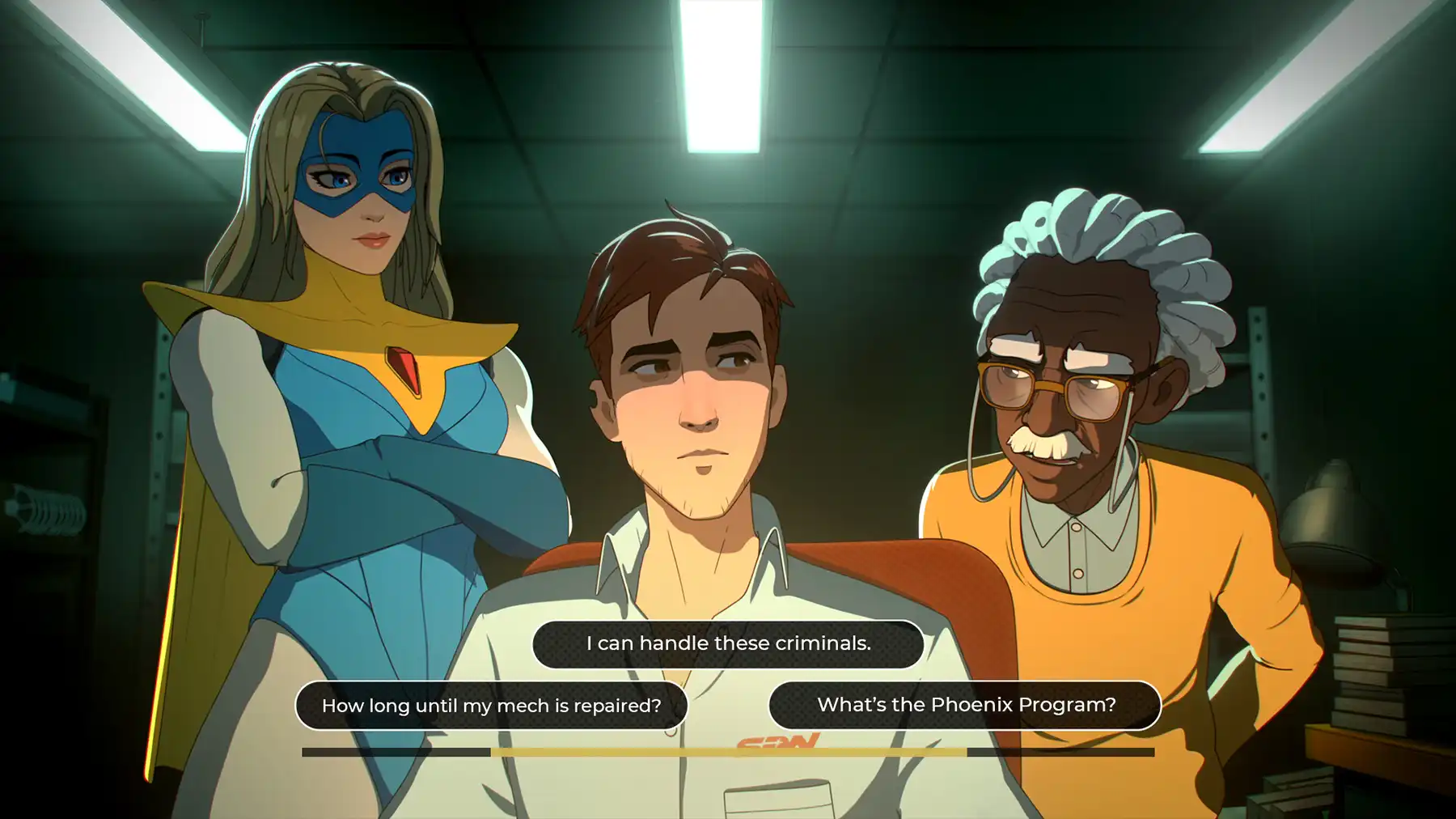
Another joy of working on Dispatch? Developing a project with such a star-studded cast voicing the game’s world of offbeat superheroes and villains. Many reviewers likened the game to an interactive film, and befitting of that label, Dispatch features film-quality acting from a mix of Hollywood stars like Breaking Bad’s Aaron Paul, veteran video game voice actors like The Last of Us’ Ashley Johnson, and famous content creators like MoistCr1TiKal. “The whole cast is great, but the one that made me immediately go, ‘Oh my god, we got this person?’ It was Jeffrey Wright,” Williams says of the Batman, Hunger Games, and Westworld star. “Man, he’s so cool!”
Just as she struggles to fathom Jeffrey Wright working on the same project as her, Williams says she’s also had a hard time coming to terms with the game’s meteoric success. “Feeling this much ownership over something that then goes on to touch this many people is something that my brain can’t fully grasp,” she says. “My manager told me that every game they put out at Telltale, someone would come up to him at some point and say it was their favorite game. With the great reception Dispatch has had, that’s kind of the thing I like to hold in my heart.”